For World Mental Health Day, can you tell us about your mental health journey?
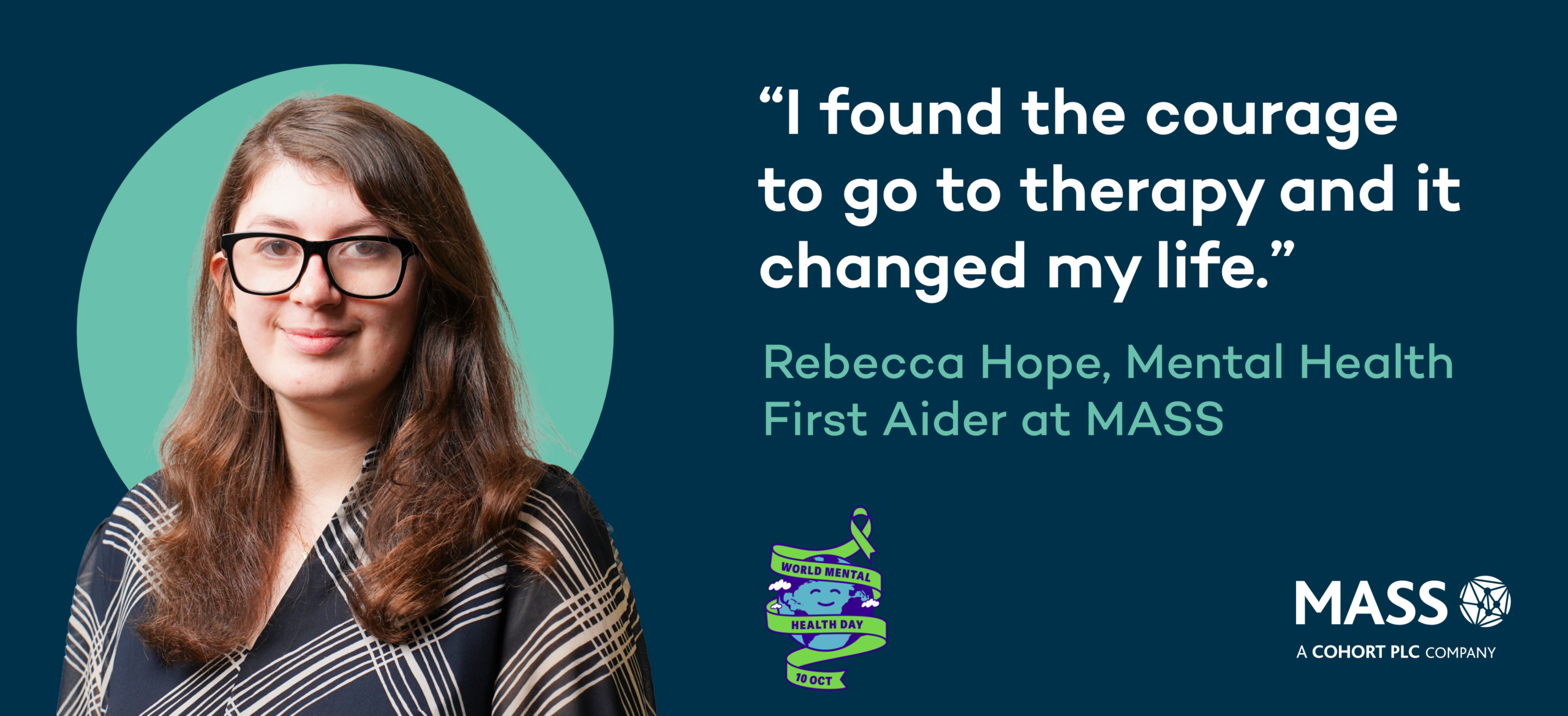
My mental health journey has been transformative. By learning how to manage challenges that once felt overwhelming, I’ve been able to build a happier, more confident and comfortable life. I live with OCD and body dysmorphia, but for a long time I didn’t fully understand what was happening or why I was struggling. Eventually, I found the courage to seek support through therapy, which became a huge turning point in my life.
How did therapy help with your mental health journey?
Therapy completely changed my life for the better. It helped me understand my thoughts and behaviours, gave me practical tools to manage symptoms, and enabled me to approach challenges with greater confidence and self-awareness. MASS also promotes wellbeing through benefits such as health insurance. After my first experience of therapy ended, this allowed me to access private therapy and continue receiving the support I needed at a much lower cost. I have been out of therapy since 2022, but the skills and coping mechanisms I developed continue to support me today and will do for the rest of my life.
What difference did the culture at MASS make?
Interestingly, my first week at MASS was also the week I started therapy. Beginning my first full-time job and therapy at the same time could have felt incredibly daunting, but fortunately it didn’t. From the outset, I found MASS was filled with people who were empathetic, supportive and understood the importance of mental health. That environment made a significant difference during a major period of change in my life. I’ve been fortunate to work with colleagues and leaders who recognise that everyone has challenges outside work and are willing to listen without judgement. That culture of empathy helped me build confidence, personally and professionally, while I learned to manage my mental health more effectively.
How has that support helped you grow beyond managing your mental health?
The support I’ve received from colleagues has helped me grow in confidence, especially compared with the rather shy, anxious person I was when I first joined MASS. I’ve been encouraged to step outside my comfort zone through opportunities such as representing MASS at external events and attending conferences, where I can learn from others, bring back ideas and insight, and build professional networks. Through charity leave days, I’ve also delivered seminars to students at the University of Lincoln, offering support and advice as an alumna.
What have those opportunities shown you about the power of support?
They have shown me how a supportive environment can build confidence and improve wellbeing. With encouragement and understanding, it is possible to take on opportunities that once felt completely out of reach. My ongoing connection with the University of Lincoln also led to the creation of a work experience programme within the Research and Insight team. It gives students the chance to gain practical experience, explore research as a career path, and receive the kind of support and encouragement that can make a real difference. I never imagined I would be doing any of these things, but the belief shown by people at MASS has helped me grow personally and professionally, reinforcing how powerful the right support can be for someone’s confidence, wellbeing and sense of what they can achieve.
Five years on, what does becoming a Mental Health First Aider mean to you?
I’ve gone from trying to understand my own mental health to becoming a Mental Health First Aider. I’m now comfortable sharing my experiences in the hope that they might help others who are struggling, while recognising that there is still so much more for me to learn about mental health. Becoming a first aider has helped me build that knowledge and, hopefully, put me in a position to support colleagues and others in the same way that support was available to me when I needed it.
As a mental health first aider, what advice would give to someone struggling with their mental health today?
I’d encourage anyone struggling with their mental health to talk to someone- whether it’s a friend, family member, colleague or mental health first aider. Mental health first aiders can be a supportive, confidential pillar of support, and can make opening up a little less daunting. Similar to a physical first aider, we help keep you safe, offer support and work together to support you accessing the right professional care.
It’s also important to take proactive steps to maintain good mental health. When I find myself struggling, I find it helpful to focus on small, grounding acts of self-care. Over time, I’ve learned that recovery isn’t always linear; there will be good days and difficult days. Having strong foundations, whether that’s staying connected to people you care about, getting outside, prioritising rest, or making time for activities that help you feel like yourself, can make it easier to navigate those tougher periods and regain your balance.
Find out more about life at MASS is about here.